
Your Diet During Chronic Kidney Disease
Does Diet Affect Your Chronic Kidney Disease?
The short answer is yes! Food is essential for its nutrients and allows our body to carry out its bodily functions. However, with kidney disease, eating right is extremely vital, as the kidneys actively filter blood to remove excess waste from the body. This includes a high amount of metabolic waste or toxins that come from our food. Thus, overindulging and having little value towards your diet can highly burden your kidneys and worsen your condition. Always consider your dietary needs before eating and select foods that are suitable for your condition. Here are some simple and sustainable tips to stay on track with your diet:
1. Manage Your Blood Sugar Levels!
Poor blood sugar control in diabetes can damage the tiny blood vessels in the kidneys and worsen kidney function over time. To help keep blood sugar levels stable, try to eat your meals on time and consume a moderate amount of carbohydrates at each main meal. Limit or avoid sweetened beverages and desserts, as they can cause rapid spikes in blood sugar. Also, remember to include vegetables in every meal, as they help support better blood glucose control. Simple and consistent eating habits can help protect your kidneys and improve overall health.
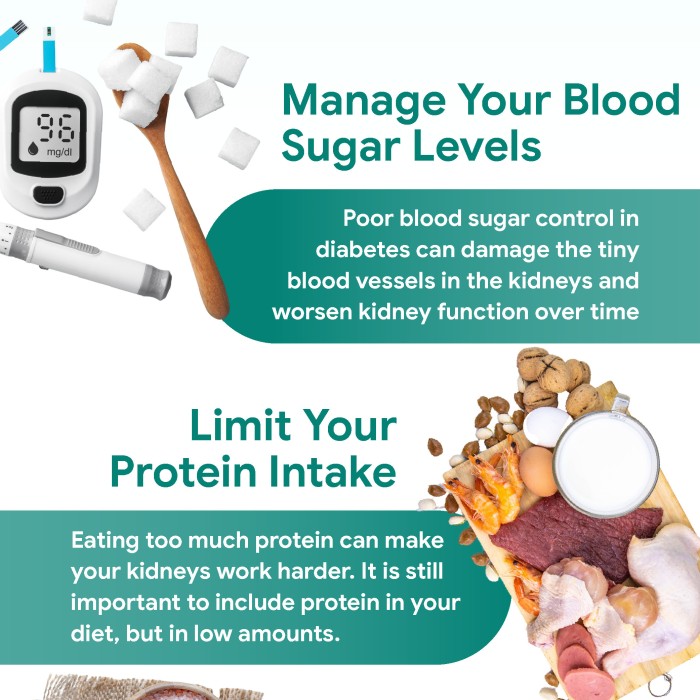
2. Limit Your Protein Intake
Eating too much protein can make your kidneys work harder. It is still important to include protein in your diet, but in low amounts. Good sources include chicken, fish, and eggs. Plant-based proteins are also a good option because they are generally easier on the kidneys. Examples include tofu, tempeh, and soy milk. Always consult your doctor or dietitian to determine the right amount and types of protein suitable for your daily diet.
3. Be easy on your salt!
Salt, also known as sodium, can cause your body to retain fluid when consumed in excess. This can put extra pressure on your kidneys and worsen kidney problems. Choose home-cooked meals instead of takeaways whenever possible. Limit the amount of salt, soy sauce, and artificial flavourings used in cooking. Most importantly, avoid foods that are high in salt, such as processed meats, canned foods, and ultra-processed snacks like chips and instant noodles.
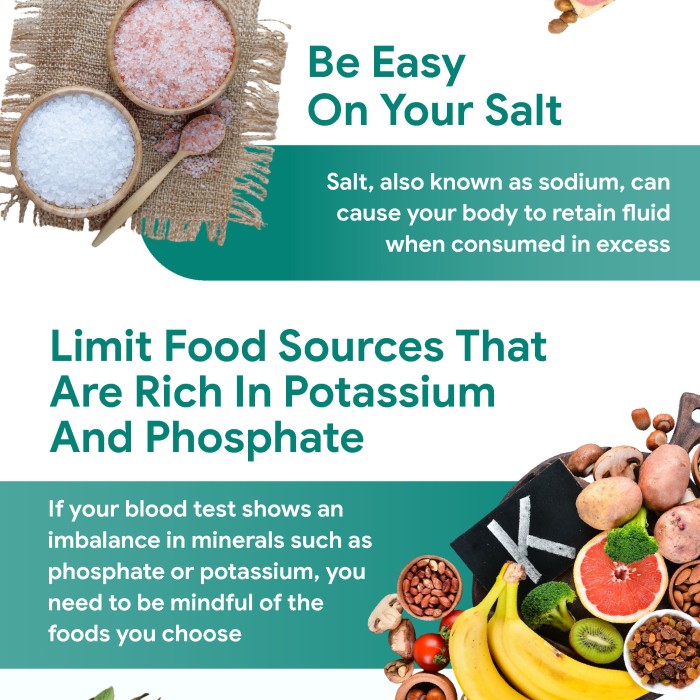
4. Limit food sources that are rich in potassium and phosphate
If your blood test shows an imbalance in minerals such as phosphate or potassium, you need to be mindful of the foods you choose. Foods such as processed meats, organ meats, legumes, and nuts are high in phosphate and should be limited. Instead, opt for fresh protein sources like fish, chicken, eggs, and plant-based proteins such as tempeh and tofu. You should also choose lower potassium vegetables such as cucumbers, brinjal (eggplant), bean sprouts (taugeh), and carrots. Besides that, soaking and blanching vegetables can also help reduce their potassium content. Do get your diet consultation with your dietitian to help you identify the most suitable food choices for your condition.
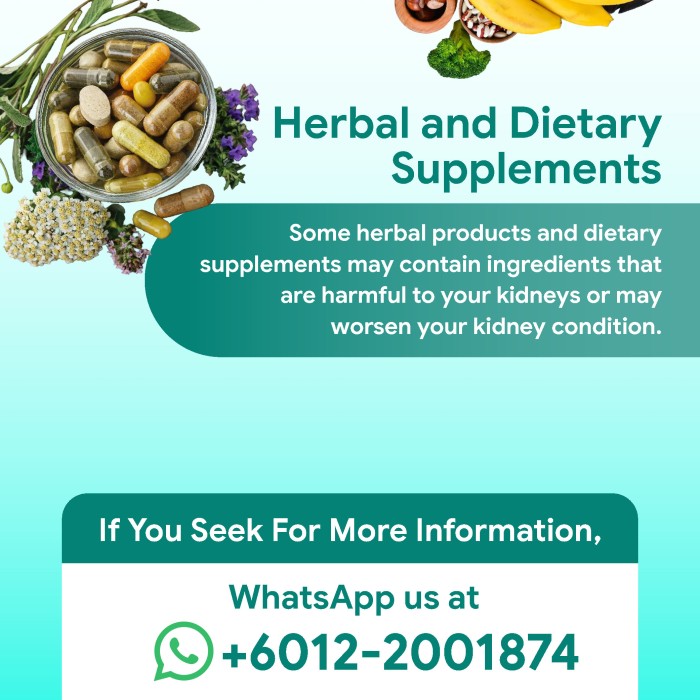
5. Herbal and dietary supplements
Some herbal products and dietary supplements may contain ingredients that are harmful to your kidneys or may worsen your kidney condition. Therefore, it is important to be cautious when using these products. Talk to your doctor or dietitian before taking any new supplements or herbal products to ensure they are safe for you.
Our Strength
Why Choose Us
Our Expertise
Cost-efficient Quality Care
Trusted & Recommended
Friendly Team
Strategic Location
18+
Years in Operation
21
Medical Specialities
28+
Specialist Doctors
36+
Panel Insurance
Our Panel Insurance
AIA Insurance


Tokyo Marine Insurance


MANULife Insurance


PRUDENTIAL BSN


Prudential


Allianz Insurance


ETIQA Insurance


Hong Leong Assurance


AXA Insurance


MCIS Life


Great Eastern Insurance


Zurich


AM Assurance


Lonpac Insurance


TAKAFUL Malaysia


FWD


IHM Sdn Bhd


HealthMetrics


International Assistance


Compumed Services


MiCare


Eximius Medical Administration (EMAS)


Integrated Health Plans (Malaysia) Sdn Bhd


Mednefits Sdn Bhd


PMCare


Red Alert Online


PraAssist


Miya Care


MediExpress Malaysia


MSIG Insurance (Malaysia) Bhd


Medilink Global (M) Sdn Bhd


SIHAT Malaysia


Iltizam Selangor Sihat


Asia Assistance Insurance


Peduli Sihat


CuepacsCare


Crescent Solution (M) Sdn Bhd


ASP Medical Group

